

The Power of Public Art: The Buffalo Pothole Bandit
“I hope people will realize that they have ownership of their public environment- both to claim and take up space, but also to care for our public spaces.”
-The Buffalo Pothole Bandit
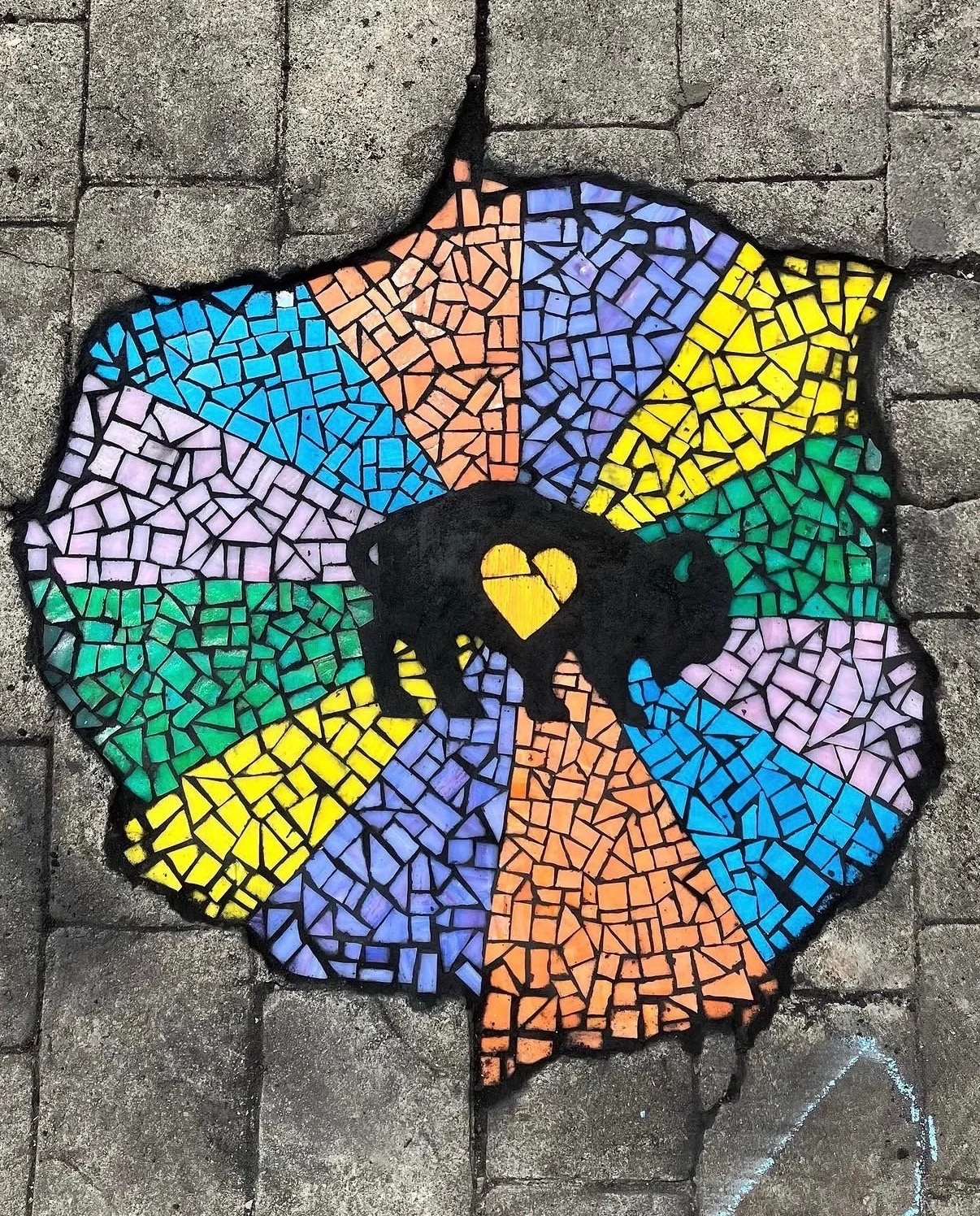
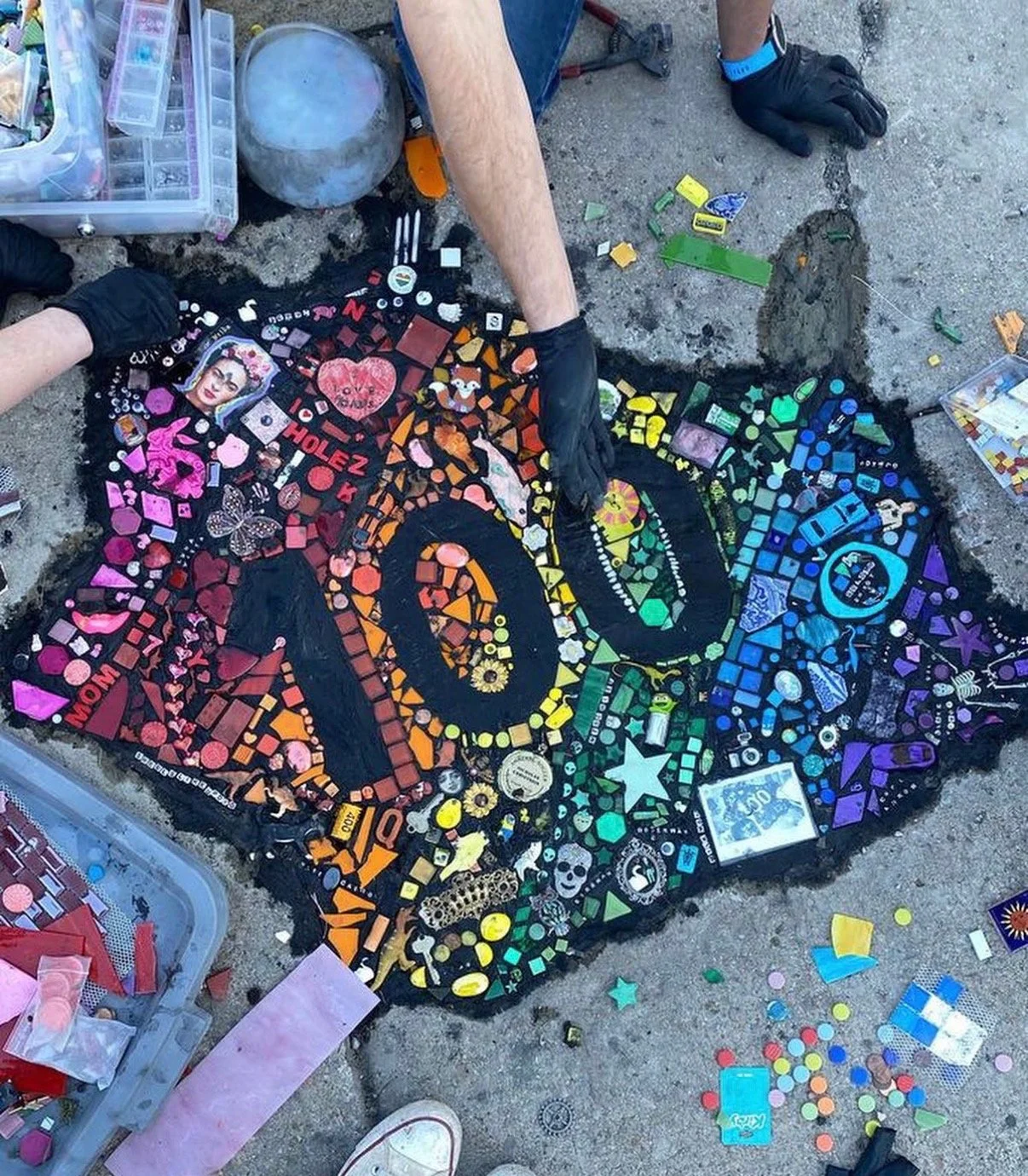
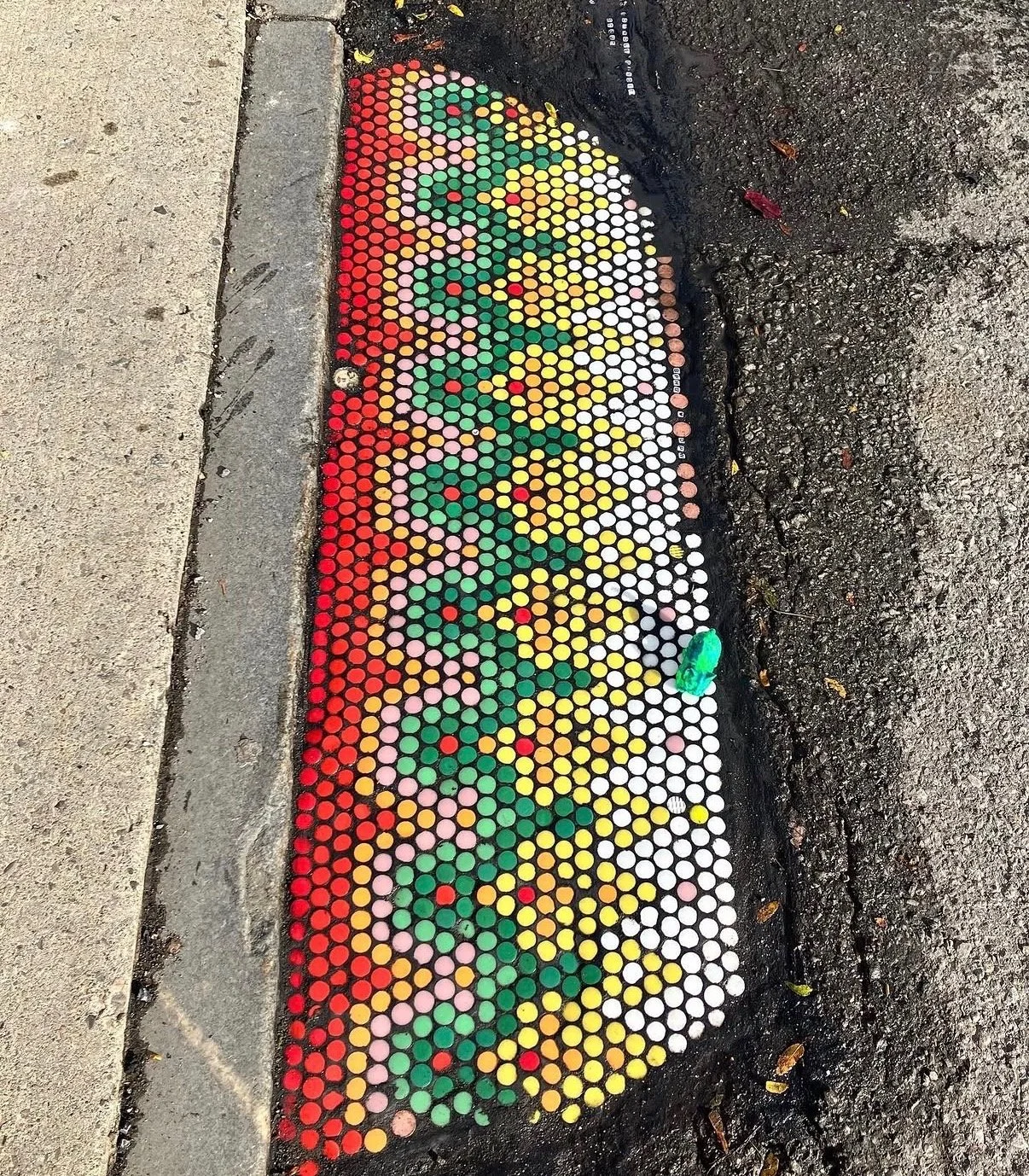
The Big One on a sidewalk on Elmwood
Photo by The Buffalo Pothole Bandit
Public art is, at its core, about making creative expressions accessible. It allows people to stop and think, to take a closer look and engage with the world around them. It has the power to shift perspectives and draw attention to the issues shaping our everyday lives. For the Buffalo Pothole Bandit, what began as a passion project quickly evolved into a public art movement. The movement spearheaded attention to a problem facing Buffalo: its crumbling infrastructure.
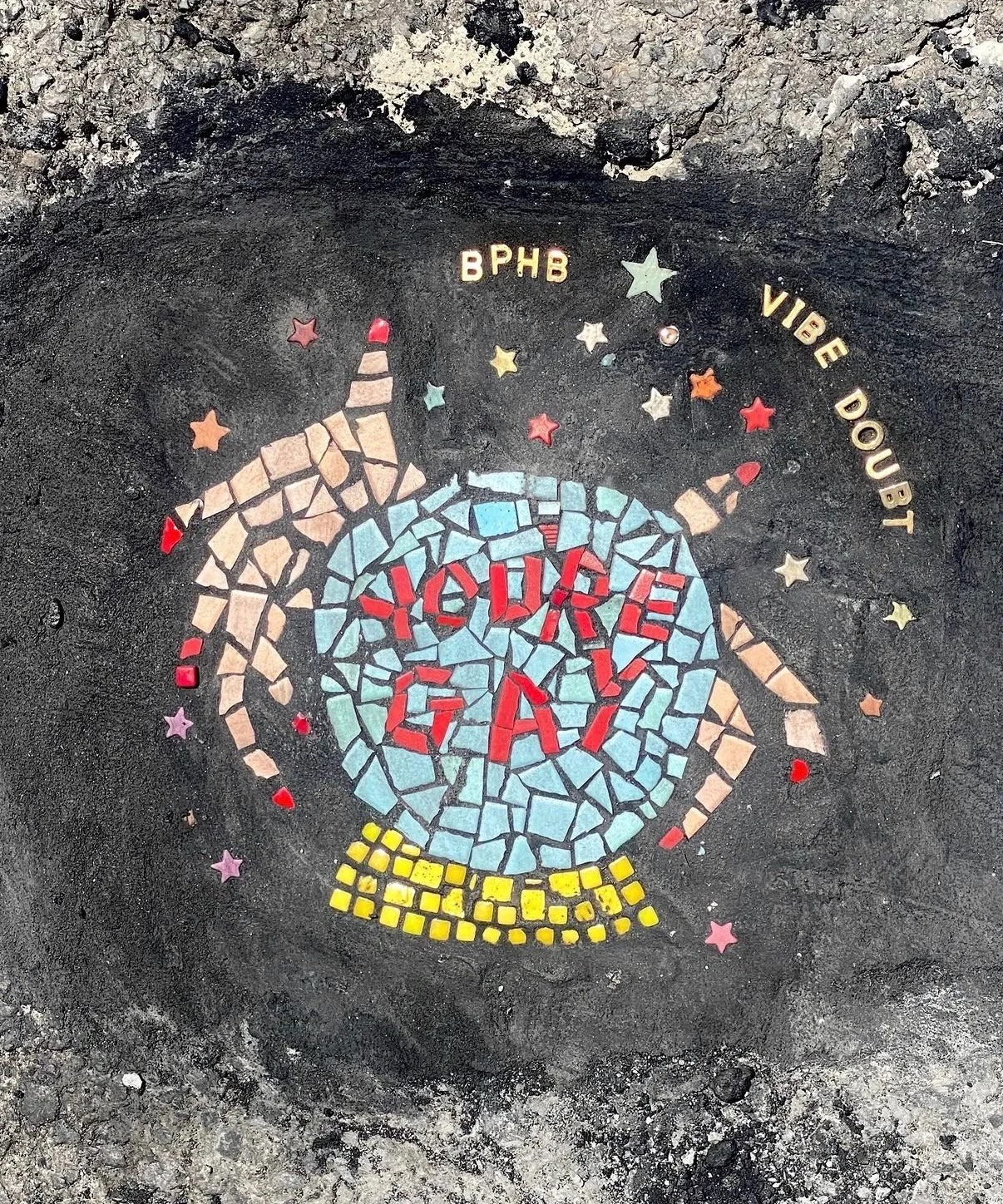
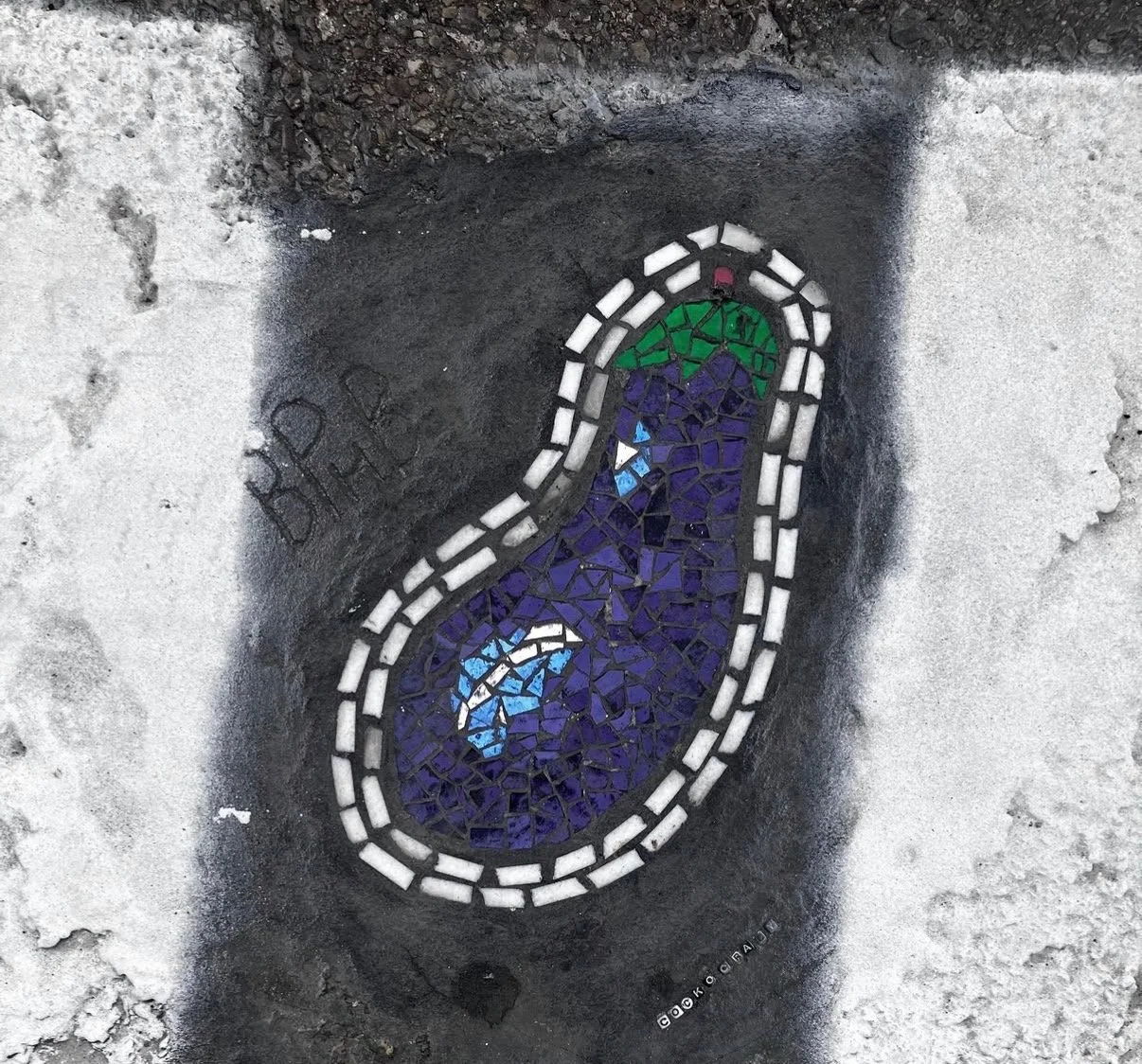
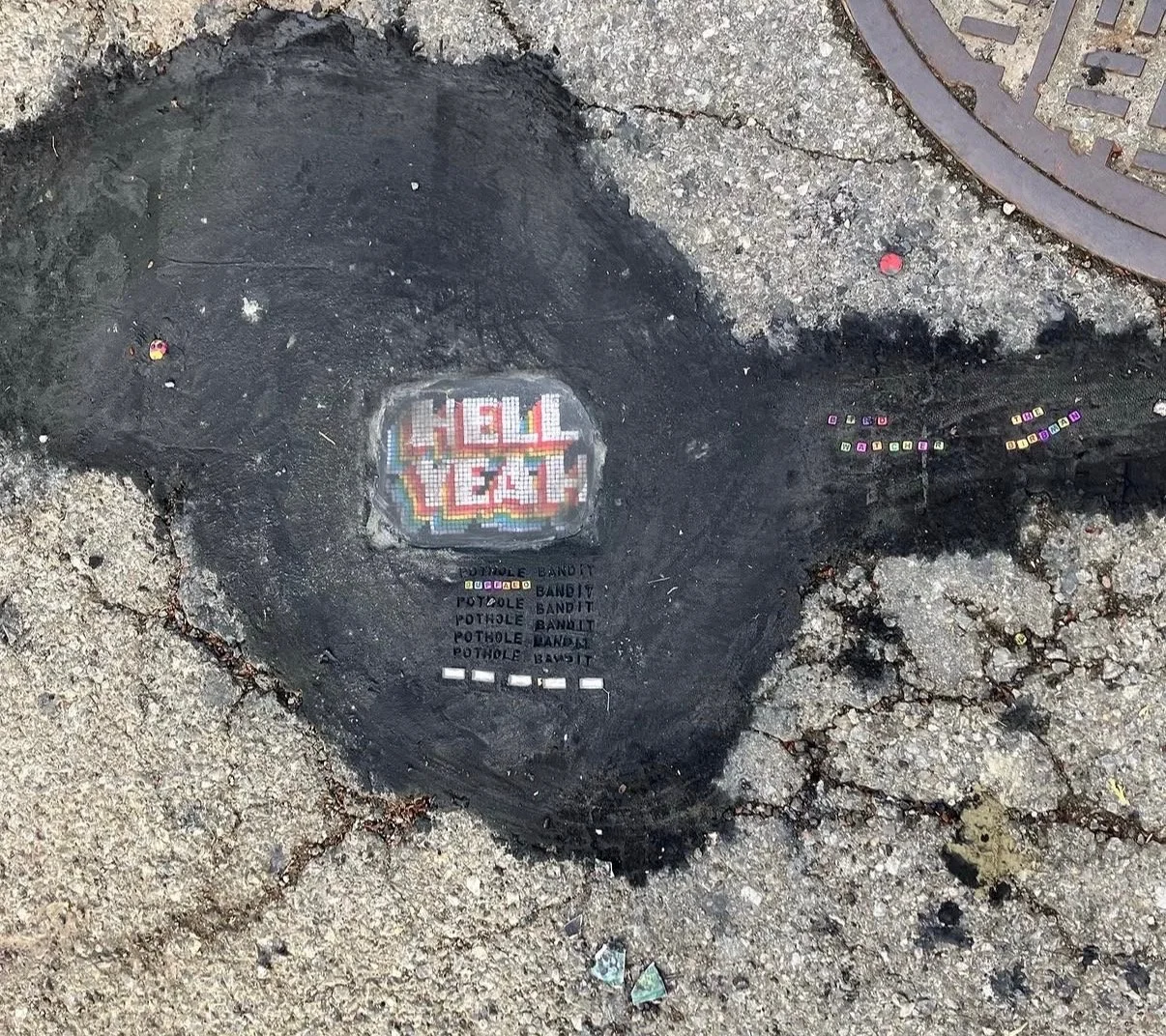
At one point, it felt like the City of Buffalo was known for their potholes, even more than their love for the Buffalo Bills. What might have once been dismissed as a minor inconvenience grew into a larger issue of safety, accessibility, and infrastructure. Using mosaics, the Pothole Bandit began filling potholes one by one, demonstrating the power of art to create awareness.
MUV Magazine sat with the Pothole Bandit to learn more about how it all began, what it felt like to pioneer a public art project, and how their creativity is continuing to evolve beyond potholes. Here is what they had to say.
The First Pothole…
What sparked the idea to become the Pothole Bandit?
I saw a pothole outside Breadhive, back then Byron was mayor, and 311 wasn’t as efficient. I decided to fill it myself instead of waiting, so I wouldn’t twist my ankle. I once saw a phone charger embedded in the pavement by mistake and thought it was so beautiful and found myself wondering what else could be entombed.
I kept filling holes because I thought it was funny and never thought the holes would be left intact by the city. Someone saw me at a hole and asked me what my Instagram was- I didn’t have one but they pushed me so hard I made one on the spot and used the first name that came to my head.
Why was it important to you to maintain your anonymity?
Originally I stayed anonymous because I was afraid of the law since filling potholes is technically illegal in Buffalo. Now that the city is supportive of me I stay anonymous to keep my private and public life separate. I don’t think fame is always a healthy thing.
Becoming THE Pothole Bandit
When you first began did you anticipate your public presence growing to the level of notoriety it has?
I had no idea that pothole mosaics would be so popular. I kept doing them because they made me laugh. It was slightly a form of graffiti for me- several of my potholes just had the word “Butts” in them. I thought it was hilarious, but I thought other people would just get a chuckle and move on with their lives. Instead, people freakin 'loved it. Once a lady saw me filling a hole and got so excited she cried. I still have trouble wrapping my mind around why the pothole art makes people so happy, but it definitely helps motivate me to continue. I feel very blessed to have the ability to affect a large group of people in a positive way.
Can you recall a moment where you realized the Pothole Bandit was well recognized?
I realized the bandit was taking off as the followers increased but then someone referred to the bandit as “based”. I didn’t know what that meant so I looked it up and thought, oh, cool.
What do you hope people will take away from the work you do as the Pothole Bandit?
I hope people will realize that they have ownership of their public environment- both to claim and take up space, but also to care for our public spaces. Nobody is coming to save you and sometimes you just need to do it yourself. Also- doing work and spending time and money for things that make other people happy can be so rewarding.
Beyond Potholes: The Buffalo Hope Project
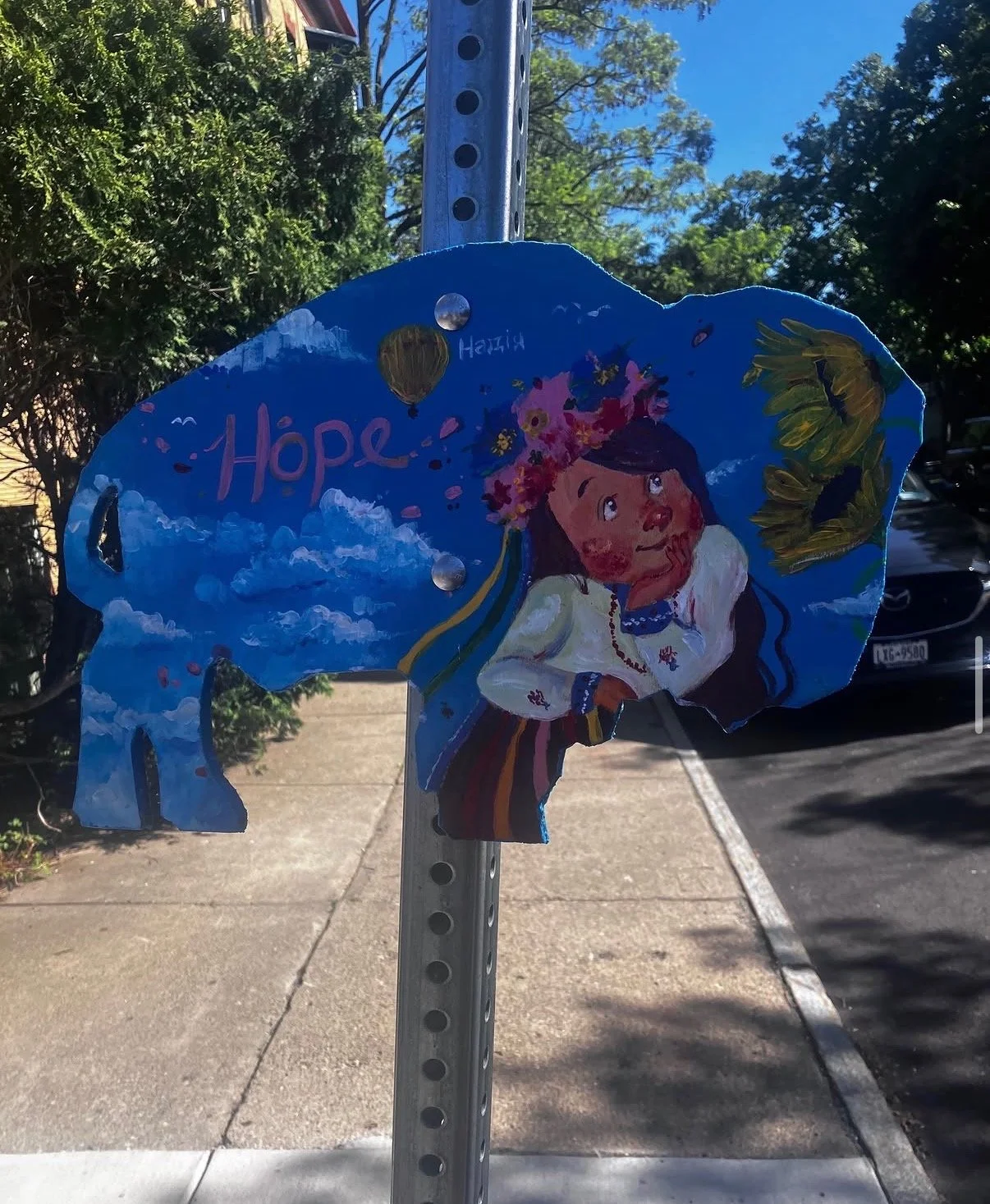
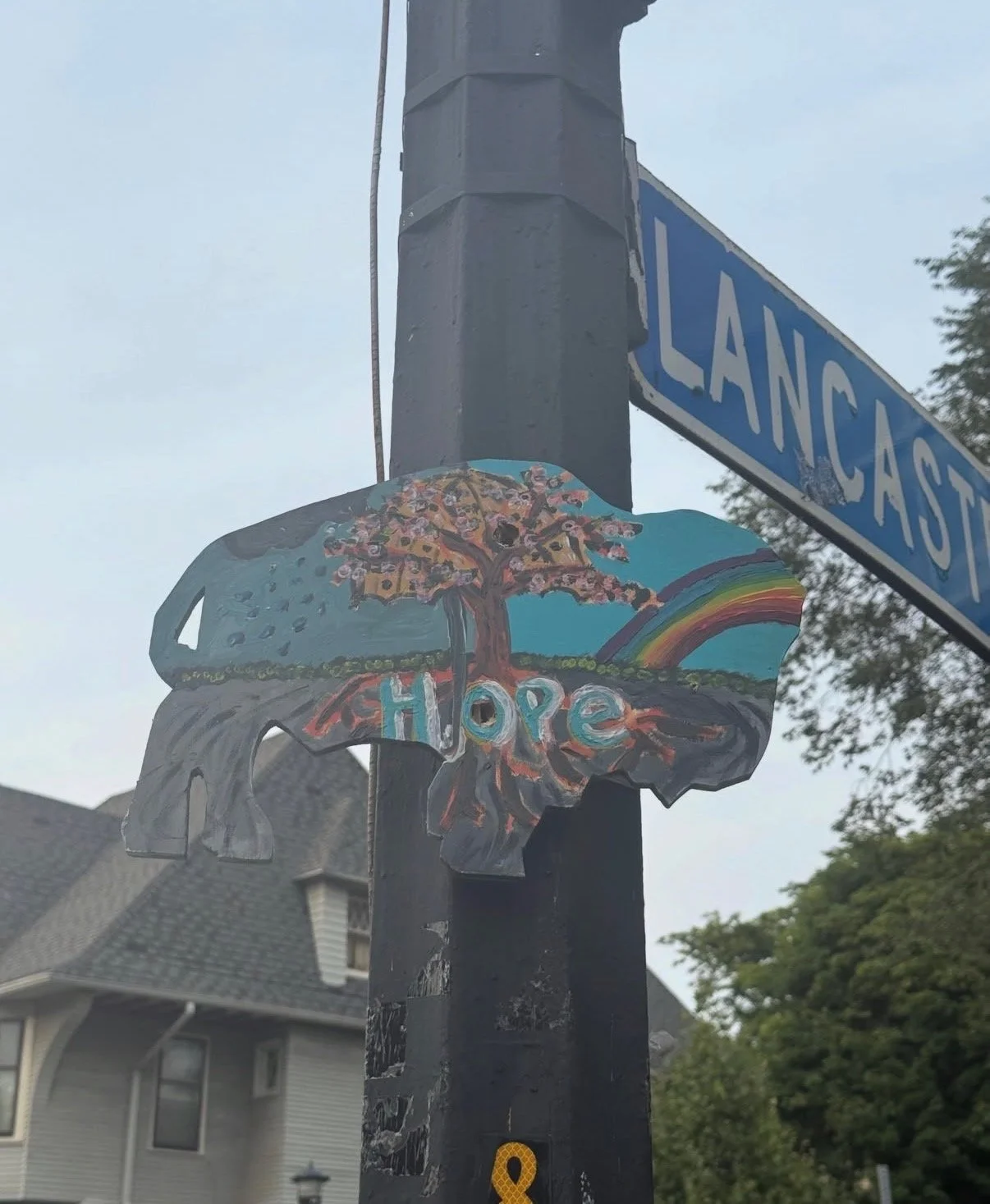
By this point, the Pothole Bandit had spent years filling potholes, but their work has always extended beyond the streets. Public art is not limited to just potholes. With The Buffalo Hope Project, they explored another side of public art, using buffalo-shaped wooden cutouts mounted on poles throughout the city to showcase the community’s definitions of hope. When we asked the Pothole Bandit about the project, it was clear that there is a want for public participation in their art. Their work is not simply about creating art for the public to observe, but about creating chances for the community to become part of the art itself.
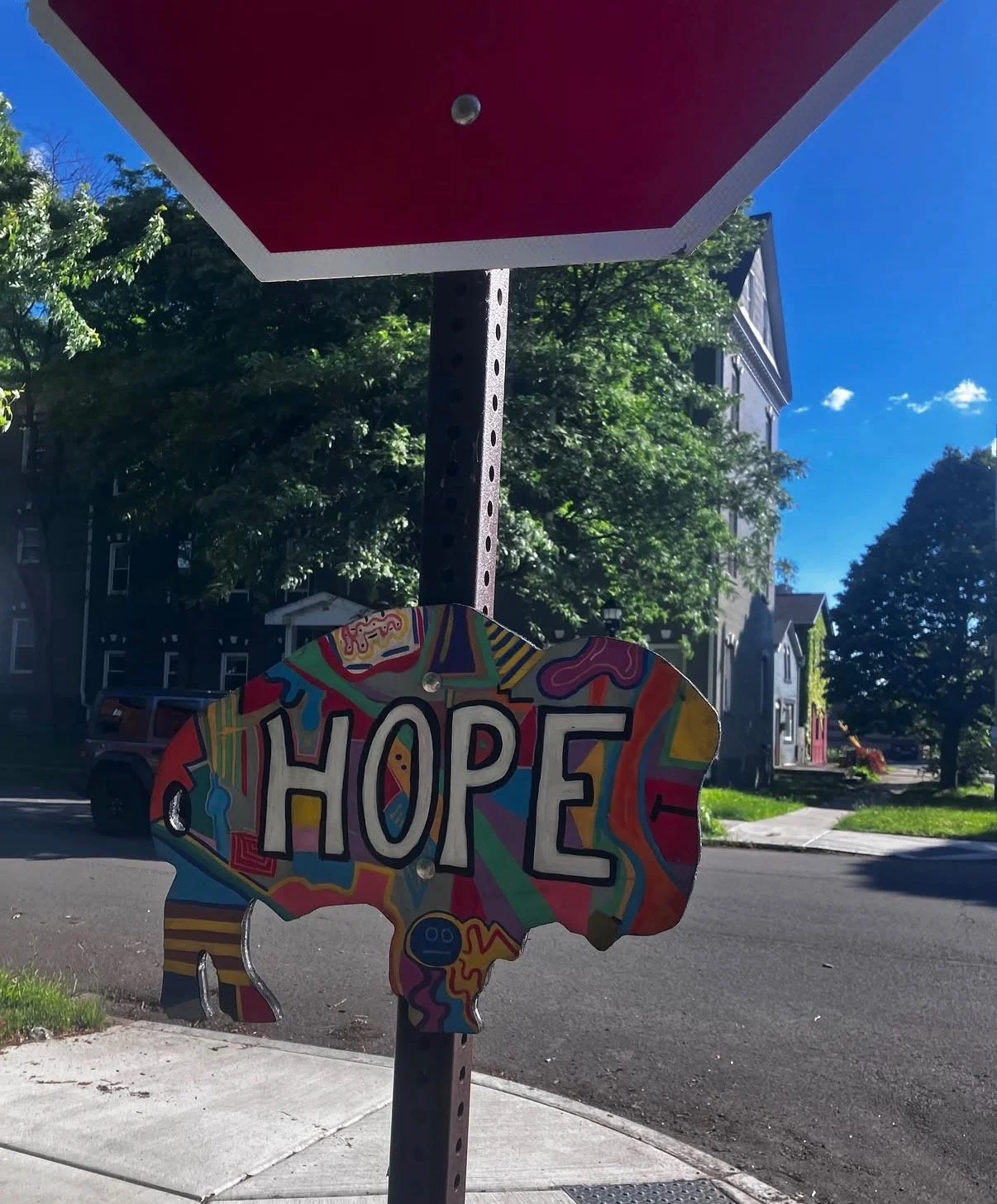
Buffalo Hope Project on Virginia Street
Photo by The Buffalo Pothole Bandit
What inspired you to start the Buffalo Hope Project?
The Buffalo Hope Project started as a desire to get more of the community involved in public art in a very visible way, and to spread a message of hope however people interpret it- which is so so wide. One person's interpretation of Hope was a recipe for Pumpkin Gnocchi. I’ve been drawn toward Poles lately- you can see them a bit more easily and honestly, there are fewer potholes now that Sean Ryan has his hotpatch machine going.
What has worked well with the Buffalo Hope Project?
What worked well was public involvement- we completed 65 Buffaloes and I had hundreds of artists offering to participate. The ones that did participate were very good at completing their work on time so they could be mounted. I also found some helpers to create the wood cutouts.
Can you talk a little bit about the challenges you have been facing with the project?
The difficulties in that were the cutting out of buffalo shapes- it’s rather labor intensive, but I felt it was important to have that shape because it reflects our identity as a city, our common thread. Also, about 8 of the Buffaloes have been damaged or torn down (not by the city)- some of them I was able to reclaim and mount higher up. I have plans for a similar project next year but with some adjustments for sustainability- stay tuned!
Play and Joy at the Center
Looking at how The Pothole Bandit approaches their work, it’s clear that it began and continues from a place of joy. What started as something that brought them happiness grew into something that could bring joy to others. At MUV, we believe in creating from that same place, and we wanted to explore what that means to The Pothole Bandit.
Why turn potholes into art pieces and use mosaics to cover the potholes instead of your average construction supplies?
It’s pretty! It breaks up people's day and is a side step from the mundane. Seeing unexpected things in ordinary places makes me feel more alive.
At MUV, we value play as a radical act, using a playful medium such as mosaic, what is your take on “play” being a radical act?
I think play is a radical act because we are conditioned to be “adult” in adult ways and to be serious and not be childlike. I think we need to retain our childlike sense of wonder so our eyes are open to all the opportunities that are around us.
What has been the most rewarding part of being the Pothole Bandit?
The most rewarding thing about being the bandit is bringing joy to people. I cannot believe how lucky I am to have this opportunity- and also now to be serving as a guide for others for their own renegade public art projects.
What is one thing you want the people to know about the Pothole Bandit?
One thing I want people to know about the pothole bandit is…I do not exist.
The Buffalo Pothole Bandit brings people together, creating conversations around the joy of public art and how even as an adult, play is prevalent in creation; all under the cloak of anonymity. These are the kind of impressions we want Buffalo to leave on others. And hopefully, we get to see more people in our communities express the joy and play we strive to foster in buffalo, just as The Buffalo Pothole Bandit did.
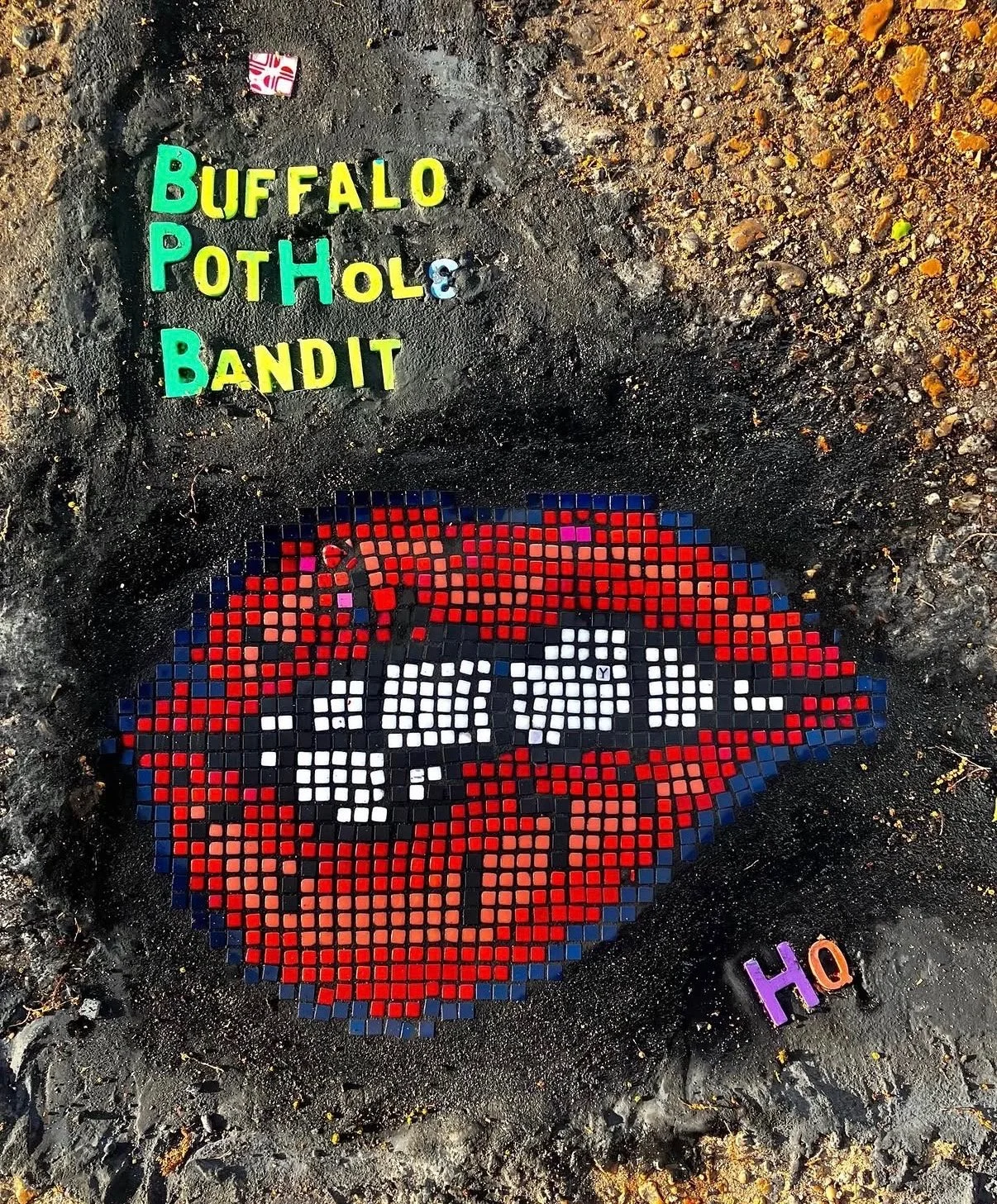
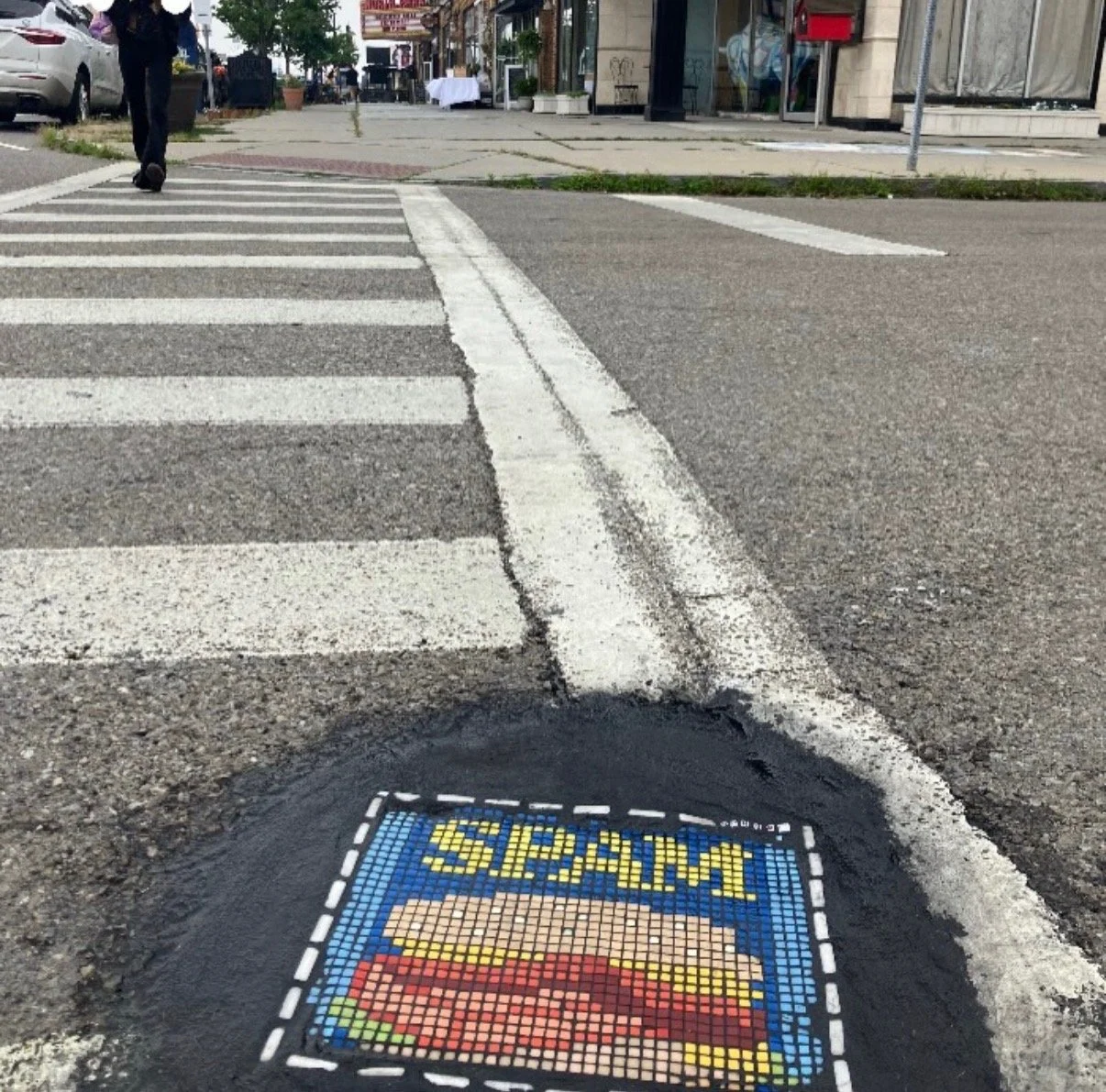
All Photos by The Buffalo Pothole Bandit